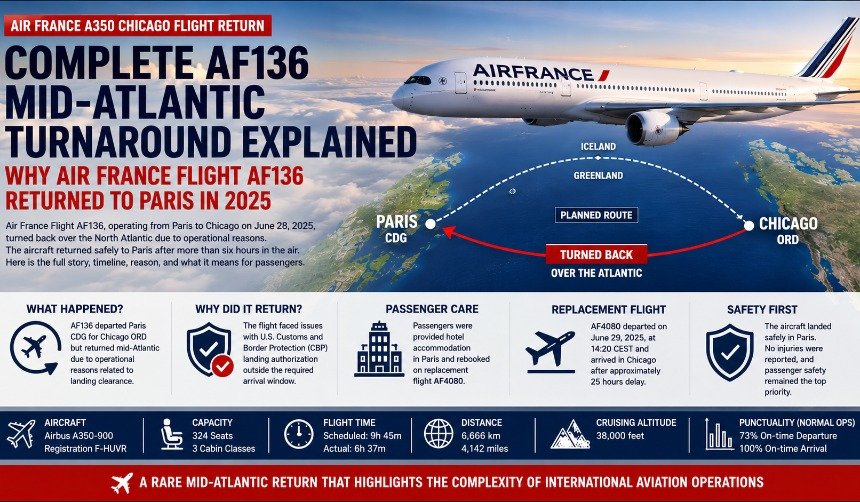
Air France A350 Chicago Flight Return: Complete AF136 Mid-Atlantic Turnaround Explained
Introduction
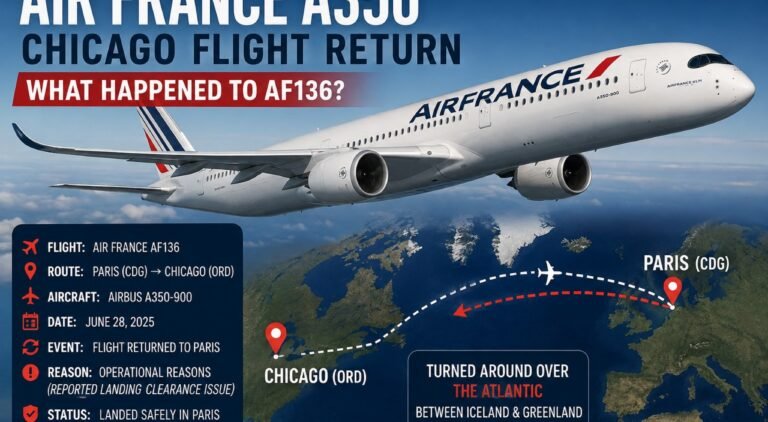
Commercial aviation operates under some of the world’s strictest safety and regulatory standards, making unexpected mid-flight returns exceptionally uncommon. One of the most widely discussed operational events of 2025 involved Air France Flight AF136, an Airbus A350-900 scheduled to fly from Paris-Charles de Gaulle Airport to Chicago O’Hare International Airport. After spending more than six hours in the air and reaching the North Atlantic, the aircraft reversed course and returned safely to France instead of continuing toward the United States. The unusual decision generated significant public interest because no onboard emergency or technical failure was officially reported. In 2026, the incident remains an important case study in international aviation operations, border clearance procedures, airline decision-making, and passenger rights, highlighting how regulatory requirements can dramatically affect long-haul flights even when safety is never compromised.
Confirmed Flight Details of Air France Flight AF136
| Detail | Information |
| Full Name | Air France Flight AF136 Chicago Return Incident |
| Popular Name | Air France A350 Chicago Flight Return |
| Airline | Air France |
| Flight Number | AF136 |
| Route | Paris-Charles de Gaulle (CDG) → Chicago O’Hare (ORD) |
| Aircraft Type | Airbus A350-900 |
| Aircraft Registration | F-HUVR |
| Flight Date | June 28, 2025 |
| Departure Time | 12:49 CEST |
| Departure Airport | Paris-Charles de Gaulle Airport (CDG) |
| Planned Destination | Chicago O’Hare International Airport (ORD) |
| Cruising Altitude | Approximately 38,000 feet |
| Turnaround Location | North Atlantic between Iceland and Greenland |
| Official Return Reason | Operational reasons |
| Reported Operational Issue | Landing clearance complications |
| Return Landing Time | 19:26 CEST |
| Total Flight Time | 6 hours 37 minutes |
| Injuries Reported | None |
| Passengers and Crew | Approximately 250 onboard |
| Passenger Assistance | Hotel accommodation and rebooking provided |
| Replacement Flight | AF4080 on June 29, 2025 |
| Estimated Total Delay | Around 25 hours |
What Happened on Air France Flight AF136?
Air France Flight AF136 was operating its regularly scheduled service from Paris to Chicago using an Airbus A350-900 when an unexpected operational issue altered the journey. After progressing normally across Europe and into the North Atlantic, the aircraft executed a rare turnaround and returned to Paris instead of continuing toward North America. The event attracted widespread attention because such long-distance reversals remain highly unusual in modern commercial aviation.
Scheduled Route from Paris to Chicago
AF136 departed Paris-Charles de Gaulle Airport for Chicago O’Hare International Airport following its planned long-haul transatlantic routing.
Departure Details and Initial Flight Progress
The aircraft climbed normally to cruising altitude and continued westbound across the United Kingdom before entering North Atlantic airspace.
The Unexpected Mid-Atlantic Turnaround
Several hours into the journey, the flight reversed direction and safely returned to Paris under operational circumstances announced by the airline.
Confirmed Flight Details of Air France AF136
The incident involved one of Air France’s modern Airbus A350-900 aircraft operating a standard intercontinental passenger service. Public flight-tracking information and airline statements confirmed that the return occurred without injuries or emergency declarations. The unusual operational disruption highlighted the complexity of international airline coordination while demonstrating the importance of regulatory compliance for transatlantic operations.
Aircraft Registration and Technical Information
The aircraft involved was Airbus A350-900 registration F-HUVR, designed for efficient long-haul international passenger operations.
Route, Schedule, and Passenger Capacity
The scheduled service connected Paris and Chicago while carrying approximately 250 passengers and crew members onboard.
Timeline of Departure and Return
The flight departed shortly before afternoon local time and landed safely back in Paris after more than six hours airborne.
Complete AF136 Timeline: Minute-by-Minute Breakdown
Flight tracking records show that AF136 followed its planned departure profile before changing course over the North Atlantic. The aircraft remained airborne for approximately six hours and thirty-seven minutes before returning safely to Charles de Gaulle Airport. Although passengers experienced significant delays, the landing occurred without incident, making the event notable for operational rather than emergency reasons.
Takeoff from Paris Charles de Gaulle Airport
The Airbus A350 departed normally from Runway 26R and began its scheduled westbound journey toward Chicago.
Flight Path Across the United Kingdom and Atlantic
After crossing British airspace, the aircraft continued along its assigned transatlantic routing before reversing direction.
Return to Paris and Safe Landing
The aircraft landed safely at Charles de Gaulle Airport where passengers were assisted and rebooked for onward travel.
Why Did the Air France A350 Turn Back Over the Atlantic?
The unexpected return became the central question surrounding AF136 because no technical malfunction or medical emergency was officially reported. Air France described the event as resulting from operational reasons, while aviation discussions indicated that arrival authorization complications may have prevented the aircraft from completing its planned landing at Chicago O’Hare International Airport under applicable entry requirements.
Air France’s Official Operational Explanation
The airline publicly attributed the return to operational circumstances without announcing any onboard emergency or aircraft defect.
Reports About Chicago Arrival Clearance Issues
Industry discussions suggested that administrative arrival authorization challenges influenced the decision to abandon the transatlantic crossing.
How U.S. CBP Landing Authorization Affected the Flight
Strict advance clearance procedures reportedly contributed to the operational disruption that ultimately required the aircraft to return to France.
Understanding U.S. Customs and Border Protection Arrival Rules
International flights entering the United States must satisfy strict regulatory procedures before landing authorization is granted. Airlines coordinate closely with U.S. Customs and Border Protection to ensure documentation, scheduling, and operational requirements are fulfilled. Failure to comply with designated arrival conditions may force airlines to revise plans, delay operations, or adopt alternative solutions that prioritize legal compliance and passenger safety.
The 24-Hour Advance Landing Permission Requirement
Airlines submit advance operational information before arrival, allowing authorities to review schedules and coordinate border processing requirements.
The 15-Minute Arrival Window Policy
Certain operational permissions remain valid only within approved timing windows, making schedule accuracy essential for international flights.
Why Missing Clearance Can Force Operational Changes
When authorization requirements cannot be satisfied, airlines may implement operational alternatives that comply with aviation and border regulations.
Passenger Experience During the AF136 Return Flight
For travelers onboard AF136, the return to Paris after several hours over the Atlantic created confusion and disappointment. Despite the unexpected change, cabin operations reportedly remained calm and professional throughout the journey. Flight crews continued prioritizing passenger welfare while coordinating with airline operations to ensure accommodation and onward travel arrangements after landing.
Cabin Announcements and Crew Communication
Flight attendants and pilots kept passengers informed as operational decisions developed during the unexpected return journey.
How Passengers Reacted to the Return
Many travelers expressed surprise after discovering they would arrive back at their original departure airport instead of Chicago.
Overnight Accommodation and Rebooking Process
Following arrival in Paris, affected passengers received assistance through hotel arrangements and replacement flight scheduling.
Air France Replacement Flight AF4080 Explained
After AF136 returned safely to France, Air France organized an alternative service to transport passengers to Chicago. The replacement operation demonstrated the airline’s commitment to minimizing disruption while restoring travel plans. Although the delay extended journeys significantly, rebooking efforts ensured travelers eventually continued toward their intended destination under normal operating conditions.
Departure Schedule from Paris
Replacement Flight AF4080 departed Paris the following day after operational preparations and passenger rebooking procedures were completed.
Arrival in Chicago After Rebooking
The substitute service successfully completed the transatlantic journey and delivered passengers safely to Chicago O’Hare International Airport.
Total Delay Experienced by Travelers
Most affected passengers experienced an overall delay approaching one full day compared with their original travel schedule.
Airbus A350-900 Features Used on Flight AF136
The Airbus A350-900 represents one of the most technologically advanced aircraft in modern commercial aviation, combining fuel efficiency with enhanced passenger comfort. Designed for long-haul international routes, it offers quieter cabins, improved air quality, advanced entertainment systems, and modern seating configurations. These capabilities make it a preferred aircraft for airlines operating demanding transatlantic services.
Economy, Premium Economy, and Business Class
Passengers benefit from multiple cabin options designed to accommodate different travel preferences and comfort expectations.
Inflight Entertainment and Wi-Fi Services
Modern entertainment screens and onboard connectivity enhance long-distance journeys through digital communication and media access.
Passenger Comfort and Long-Haul Capabilities
Advanced cabin design, optimized pressurization, and efficient engineering improve the overall experience during extended international flights.
How Rare Are Mid-Atlantic Flight Returns?
Commercial aircraft occasionally divert because of medical emergencies, severe weather, or technical concerns, but returning to the original departure airport after several hours over the Atlantic remains exceptionally uncommon. The AF136 incident attracted worldwide attention because the aircraft had already covered a substantial portion of its journey before reversing course, making it one of the most unusual operational events involving a modern Airbus A350.
Common Reasons for Oceanic Turnarounds
Aircraft may return because of technical concerns, medical situations, security issues, weather disruptions, or complex operational requirements.
Operational Diversions Versus Emergencies
Operational returns differ from emergencies because safety remains uncompromised while administrative or logistical circumstances require alternative planning.
Historical Comparisons With Similar Incidents
Very few commercial flights reverse course midway across the Atlantic without declaring an emergency or reporting technical difficulties.
Passenger Rights After a Long Operational Return
When unexpected operational disruptions affect international travel, airlines have responsibilities toward affected passengers under applicable regulations and company policies. These responsibilities often include rebooking assistance, accommodation, meals, and customer support. Understanding passenger rights helps travelers navigate delays while ensuring they receive appropriate care throughout the disruption.
Air France Rebooking Responsibilities
Airlines generally arrange replacement transportation to help passengers continue their journeys with minimal additional inconvenience.
Hotel Accommodation and Duty of Care
When overnight delays occur, carriers commonly provide lodging and essential assistance according to operational circumstances and regulations.
Compensation Rules Under Applicable Regulations
Eligibility for financial compensation depends on legal frameworks, disruption causes, and whether extraordinary operational circumstances apply.
Aviation Experts’ Analysis of the AF136 Incident
Industry specialists consider the AF136 return an example of operational risk management where regulatory compliance influenced flight planning decisions. Rather than continuing toward uncertainty, returning to Paris enabled controlled passenger handling and coordination with airport authorities. The case demonstrates how international aviation prioritizes structured procedures alongside safety, efficiency, and legal obligations.
Operational Decision-Making Process
Flight crews and airline operations teams evaluate multiple factors before implementing significant route changes during international services.
Risk Management in International Aviation
Careful planning minimizes operational uncertainty while protecting passengers, aircraft, regulatory compliance, and airline resources.
Importance of Regulatory Compliance
International aviation depends on strict adherence to governmental procedures that govern border entry, scheduling, and operational approvals.
Impact of the Incident on Air France Operations
Although the aircraft returned safely without injuries, the event required substantial logistical coordination involving flight operations, customer service, airport management, and replacement scheduling. Rebooking hundreds of passengers while maintaining network efficiency demonstrated the complexity airlines face when unusual disruptions occur during long-haul international flights.
Scheduling and Fleet Management Challenges
Unexpected aircraft returns require rapid adjustments to fleet planning and future operational schedules across multiple destinations.
Customer Service Response
Support teams coordinate accommodation, travel updates, and replacement bookings to reduce inconvenience for affected passengers.
Lessons Learned From the Event
The incident reinforces the importance of proactive planning, operational flexibility, and international coordination within commercial aviation systems.
Key Facts Every Traveler Should Know About AF136
The Air France AF136 incident demonstrates how international aviation depends on operational precision beyond aircraft performance and onboard safety. Although the flight departed normally and encountered no technical emergency, external regulatory considerations significantly influenced its outcome. Understanding the essential facts allows travelers to appreciate the complexity of modern airline operations and the safeguards protecting international air transport.
Essential Timeline Summary
AF136 departed Paris, crossed into the North Atlantic, reversed direction midway, and landed safely back at Charles de Gaulle Airport.
Operational Cause at a Glance
Air France identified operational reasons as the basis for the return while discussions highlighted possible arrival authorization complications.
Main Takeaways for International Travelers
Unexpected operational disruptions can occur despite safe aircraft conditions because international regulations remain critically important.
Aviation Safety Lessons From the Air France A350 Return
The AF136 event highlights the aviation industry’s commitment to structured decision-making and proactive operational management. Returning to Paris rather than continuing under uncertain circumstances demonstrated a cautious approach designed to protect passengers while complying with international procedures. The incident reinforces how safety extends beyond aircraft mechanics into regulatory coordination and strategic planning.
Importance of International Flight Coordination
Successful long-haul operations require continuous communication between airlines, airports, air traffic control authorities, and border agencies.
Why Compliance Matters Before Landing
Meeting administrative requirements remains essential because regulatory approval directly influences international arrival authorization and airport access.
How Airlines Protect Passenger Safety
Airlines prioritize structured operational decisions that minimize uncertainty while maintaining the highest possible safety standards.
Final Analysis
Among the thousands of transatlantic flights completed successfully every year, Air France Flight AF136 stands out as a rare example of a long-haul aircraft returning to its departure airport after spending more than six hours in the air. The absence of a technical malfunction or onboard emergency made the event especially remarkable, drawing attention from aviation professionals and travelers worldwide. While operational considerations ultimately prevented the journey from reaching Chicago, the safe outcome reflected the effectiveness of international aviation procedures and airline contingency planning. As discussions continue into 2026, AF136 serves as an important reminder that regulatory compliance, operational flexibility, and passenger safety remain fundamental pillars of global commercial aviation.
Frequently Asked Questions
Air France attributed the aircraft’s return to operational reasons associated with circumstances affecting completion of the scheduled journey.
No official reports indicated a medical emergency, technical failure, or emergency declaration requiring immediate diversion.
The aircraft landed safely in Paris, and no passenger or crew injuries were publicly reported following the incident.
The service was operated by an Airbus A350-900, one of Air France’s advanced long-haul aircraft.
Affected travelers were accommodated in Paris and later transported to Chicago using a replacement flight arrangement.
Mid-Atlantic returns caused by operational circumstances remain exceptionally rare within modern commercial aviation
You may also read: EasyJet U24429 Emergency 2026: What Happened During the Lyon to Porto Flight?
Delta Flight Atlanta Airport Delay: Your 2026 Guide to Compensation & Rebooking
For More Information, visit imagefaps