
R6 Marketplace: Guide to Trading, Pricing, and Profit in Rainbow Six Siege
The R6 Marketplace has completely changed how players interact with cosmetics in Tom Clancy’s Rainbow Six Siege. For years, players depended on Alpha Packs and seasonal drops, which were purely based on luck. You could grind for weeks and still never get the skin you wanted.
That system created excitement, but it lacked control.
Now, with the R6 system, players finally have structured access to a player-driven economy where items can be bought and sold more strategically. Instead of relying on randomness, players can directly influence their inventory and value.
This shift is not just cosmetic it represents a deeper economic transformation inside the game ecosystem managed by Ubisoft.
However, most players still use the r6 marketplace at a surface level. They buy skins they like and sell unwanted items without understanding the deeper mechanics behind pricing, timing, and market psychology.
This guide goes beyond that.
It focuses on:
- Advanced trading logic
- Market behavior patterns
- Profit optimization
- Risk control
- Psychological triggers in the r6
If you understand these systems, you stop being a casual buyer—and start acting like a market strategist.
Understanding the R6 Marketplace System
Core Mechanics of the R6
The r6 is built on a structured matching system where buyers and sellers interact without direct contact.
In simple terms:
- Sellers list items at chosen prices
- Buyers place offers or accept listings
- The system automatically matches both sides
This creates a real-time economy where prices constantly adjust based on activity.
Key Features:
- Instant purchases
- Buy order system
- Dynamic listing prices
- Automated matching engine
The biggest advantage of the r6 marketplace is control—players decide value, not RNG.
Buy Orders vs Sell Listings
Understanding this distinction is crucial for advanced trading.
Sell Listings:
- You set the price
- You control visibility
- Faster execution if priced low
Buy Orders:
- You set demand price
- You wait for sellers
- Higher profit potential
Advanced traders prefer buy orders because they allow discount acquisition, which is the foundation of profit.
Instant Buy vs Waiting Strategy
Inside the r6 marketplace, players usually follow two main approaches: instant buyers who purchase items immediately without waiting often end up overpaying, while strategic buyers study price trends, wait for market dips, and rely on historical pricing data; over time, this patient and analytical approach consistently leads to better profits and smarter trades.
Matching System Behavior
The r6 uses automated matching logic:
- Lowest sell price gets priority
- Highest buy order gets priority
This means:
- Prices naturally compress over time
- Arbitrage opportunities are limited
- Timing becomes the key advantage
Currency Flow & Credit Ecosystem of R6 Marketplace
The entire r6 runs on R6 Credits.
How Credits Flow in the System
In the r6 marketplace, credits move in a continuous loop where players buy credits, spend them on cosmetics, sellers earn those credits, and then those credits get reused by other players. This creates a closed in-game economy where value constantly circulates instead of leaving the system.
Credit Sinks in the System
Not all credits remain active in the r6 because some are removed through “credit sinks” like transaction fees, in-game cosmetic purchases, and limited-time bundles. These sinks reduce the total amount of credits available, which slowly limits overall liquidity in the market
Impact on Pricing Behavior
When fewer credits are circulating in the r6 marketplace, price behavior becomes more stable overall. Rare skins tend to hold their value better, while low-demand items lose value faster. This is why liquidity plays a major role in determining how strong or weak the marketplace feels over time.
Transaction Fees & Their Strategic Impact
The r6 applies a 10% transaction fee on every sale.
Real Example:
- Sale price: 1000 credits
- Fee: 100 credits
- Final profit: 900 credits
Why Fees Matter in Strategy
Fees completely change how trading works:
- Small profits become risky
- Frequent flipping becomes inefficient
- High-margin trades become necessary
When Flipping Stops Being Worth It in R6 Marketplace
Avoid flipping when:
- Profit margin is below 15%
- Demand is unstable
- Item has low liquidity
Many players fail in the r6 marketplace because they ignore fee impact.
Marketplace Access & Requirements (Technical Layer)
Access to the r6 is controlled.
Requirements
To access the r6, players must meet a few basic conditions: a minimum Level 25 account, enabled two-factor authentication, and a clean account history. These requirements ensure that only real, active players can participate in trading.
Why Restrictions Exist
The restrictions in the r6 marketplace are mainly there to keep the system fair and stable. They help prevent bot farming, stop artificial price manipulation, and ensure that all trades happen between legitimate players without exploiting the system.
Region-Based Rollout
The r6 is not available everywhere at the same time because it is being released gradually. Ubisoft is using a controlled rollout system, meaning some regions get access earlier while others remain in testing phases to ensure stability and performance.
Deep Dive Into the R6 Marketplace Economy
Supply vs Demand in the R6
Every price movement in the r6 marketplace is driven by supply and demand.
Supply Sources:
- Seasonal drops
- Event cosmetics
- Returning items
Demand Drivers:
- Visual appeal
- Operator popularity
- Community trends
Price Behavior Patterns of R6 Marketplace
In the r6 marketplace, price behavior becomes easier to predict once you study market cycles. On weekdays, player activity is usually lower, which leads to fewer trades and more stable or slightly cheaper prices. On weekends, activity increases, causing higher demand and often pushing prices upward. After major updates, the market becomes highly volatile as players react quickly to changes, creating both opportunities and risks.
Emotional Market Cycles
The r6 is also heavily influenced by player emotions, mainly through two patterns: panic selling and hype buying. Panic selling happens when players rush to sell items quickly, causing sudden price drops, while hype buying occurs when demand spikes artificially due to trends or excitement, leading to inflated prices. These emotional cycles create predictable opportunities for experienced traders who know when to enter and exit the market strategically.
Rarity vs Value Reality
A major misconception:
Rarity does NOT equal value in the r6 marketplace.
Value depends on:
- Demand
- Visibility
- Community interest
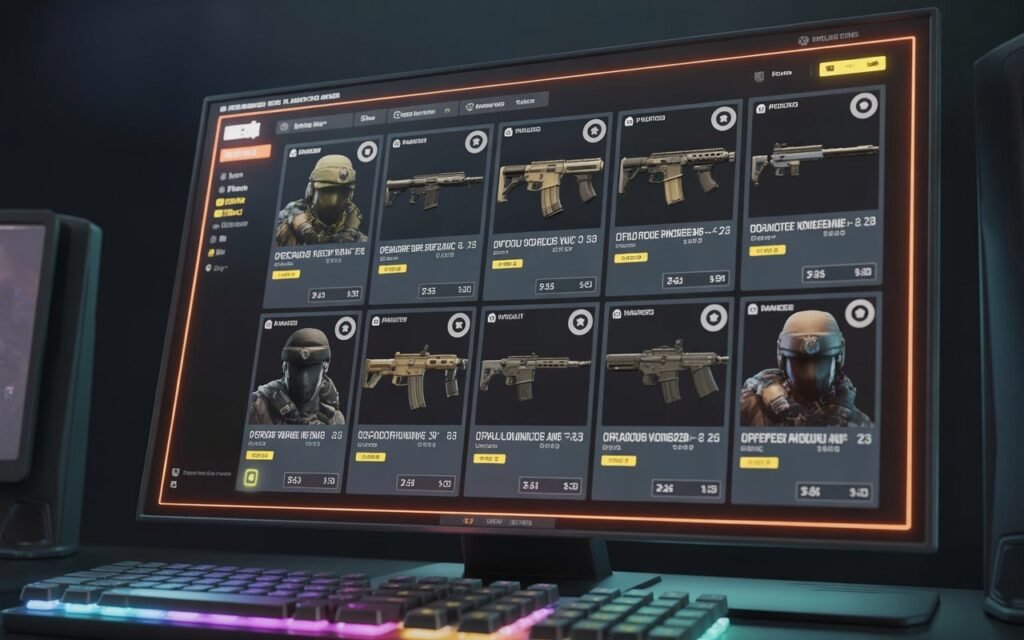
R6 Marketplace Trading Behavior Comparison
| Item Type | Demand Level | Price Stability | Profit Potential | Risk Level |
| Common Skins | Low | Low | Low | Low |
| Epic Skins | Medium | Medium | Medium | Medium |
| Legendary Skins | High | High | High | Medium |
| Event Skins | Very High | Medium | Very High | High |
Advanced Buying Strategies in the R6 Marketplace
Sniping Underpriced Items
Sniping is one of the strongest methods in the r6 marketplace.
Process:
- Monitor listings constantly
- Identify undervalued skins
- Buy instantly before competition reacts
Market Timing Strategy
In the r6, timing plays a major role in getting good deals. The best buying opportunities usually appear right after events end, during off-peak hours when fewer players are active, or after major system updates when prices temporarily fluctuate. These short windows often create discounted listings that smart traders can take advantage of.
Portfolio Building Strategy
Advanced traders treat the r6 marketplace like an investment system rather than a simple shop. Instead of relying on a single skin, they diversify across multiple items, avoid depending on one trend, and balance quick flips with long-term holds. This approach reduces risk and helps maintain steady credit growth over time.
Advanced Selling Strategies
Pricing Psychology
The r6 marketplace is heavily influenced by psychology:
- 999 credits feels cheaper than 1000
- Slight undercutting improves visibility
- Anchoring higher prices influences perception
Profit Optimization
Always calculate:
- Purchase cost
- Marketplace fee
- Final net return
Without this, profits are misleading.
Long-Term Holding Strategy
Some skins grow in value over time:
- Event exclusives
- Discontinued items
- High-demand classics
High-Demand Skins & Market Trends of R6 Marketplace
Why “Black Ice” Dominates the R6
“Black Ice” remains one of the most powerful skins due to:
- Strong visual identity
- High recognition in community
- Continuous demand
It acts like a stable asset inside the r6.
Event-Based Skin Opportunities
In the r6 marketplace, event skins often start with low demand because many players don’t immediately value them during release. However, once the event ends and the skins are no longer easily available, their value can increase due to scarcity, creating strong long-term trading opportunities for patient buyers.
Operator Popularity Influence
Skins linked to popular or meta operators in the r6 tend to perform better because they sell faster and maintain stronger value over time. Their pricing also reacts to gameplay changes, meaning buffs, nerfs, or shifts in the competitive meta can directly influence demand and market activity.
Risk Management in the R6 Marketplace
Market Risks
In the r6, market risks refer to unpredictable changes that can directly affect profits, such as sudden price crashes, overhyped items losing demand, or low-liquidity assets that are difficult to sell quickly. These risks make it important for traders to avoid emotional decisions and focus on stable demand patterns.
Security Risks
Even though the r6 marketplace is part of an official system, security risks still exist outside the platform itself. Players may face phishing attempts, fake marketplace websites, or account theft attempts designed to steal login details. Because of this, it is essential to always use official access and enable strong account protection methods.
Policy Risks
The r6 is fully controlled by Ubisoft, which means strict rules apply to all users. External trading is not allowed, and any attempt to break marketplace policies can lead to account restrictions or permanent bans. These enforcement rules are in place to keep the system fair, secure, and stable for all players.
Comparing R6 Marketplace With Other Game Economies
| Game | Trading System | Value Type | Liquidity | Key Feature |
| Counter-Strike 2 | Open trading | Real money | High | Full player-driven market |
| Fortnite | No trading | No resale value | None | Fully closed system |
| R6 Marketplace | Controlled trading | Credits | Moderate | Balanced hybrid economy |
Select 61 more words to run Humanizer.
Behavioral Psychology of R6 Marketplace Traders
FOMO Effect
Players:
- Buy during hype
- Overpay frequently
- Ignore data
Impulse vs Rational Behavior
- Impulse = losses
- Rational = long-term gains
Herd Mentality
When everyone buys:
- Prices rise artificially
- Late buyers lose value
- Market corrects quickly
Advanced Trader Advantage
Experienced traders:
- Buy early
- Sell during hype peaks
- Avoid emotional decisions
Common Mistakes in the R6 Marketplace
Even experienced players in the r6 often make costly mistakes that reduce their profits, such as ignoring transaction fees which directly cut into earnings, buying items during peak hype when prices are artificially high, holding skins for too long and missing better selling opportunities, overvaluing rarity instead of actual demand, and not studying past price history which leads to poor trading decisions and missed patterns that could have improved their strategy.
Pro Tips for Dominating the R6 Marketplace
- Check prices daily
- Track specific skins
- Reinvest profits
- Avoid emotional trading
- Focus on patterns, not hype
The Future Vision
The r6 marketplace is still in an evolving stage, and in the future it is expected to expand globally, offer better analytics tools, and provide a more refined user interface for smoother trading. Along with these improvements, it may also introduce advanced trading features, stronger in-game economic integration, and increased transparency, making the overall system more efficient, data-driven, and user-friendly for players.
Conclusion:
The r6 has transformed Tom Clancy’s Rainbow Six Siege into more than just a tactical shooter. It has introduced a structured economic layer where strategy outside the game matters almost as much as skill inside it.
Success in the r6 marketplace depends on:
- Timing
- Psychology
- Data awareness
- Discipline
Players who understand these elements can turn simple cosmetics into a powerful strategic system.
FAQs
The r6 marketplace is an official trading system in Tom Clancy’s Rainbow Six Siege where players can buy and sell in-game cosmetics like skins and charms using R6 Credits in a controlled economy managed by Ubisoft.
No, the r6 is still being rolled out gradually, so availability may vary depending on region, account eligibility, and system testing phases.
Yes, players typically need a minimum account level (usually Level 25), two-factor authentication enabled, and a clean account history to access the marketplace safely.
No, the r6 marketplace uses R6 Credits only. All trading stays within the game ecosystem, and there is no direct real-money withdrawal system.
Risks include sudden price changes, overhyped items losing value, low-liquidity skins, phishing scams outside the official system, and potential account penalties for breaking Ubisoft rules.
Successful traders usually study price history, buy during low-demand periods, sell during hype spikes, avoid emotional decisions, and always account for marketplace fees before trading.
Prices depend on demand, rarity, operator popularity, and availability. Skins with high demand or limited supply tend to be more expensive, while common items usually stay lower in value.
You may also read: What Does “Woeken” Mean? The Ultimate Guide to the Viral Productivity Slang
Xlecz Guide: The Meaning Benefits and Future of This Digital Trend
For More Information, visit imagefaps