
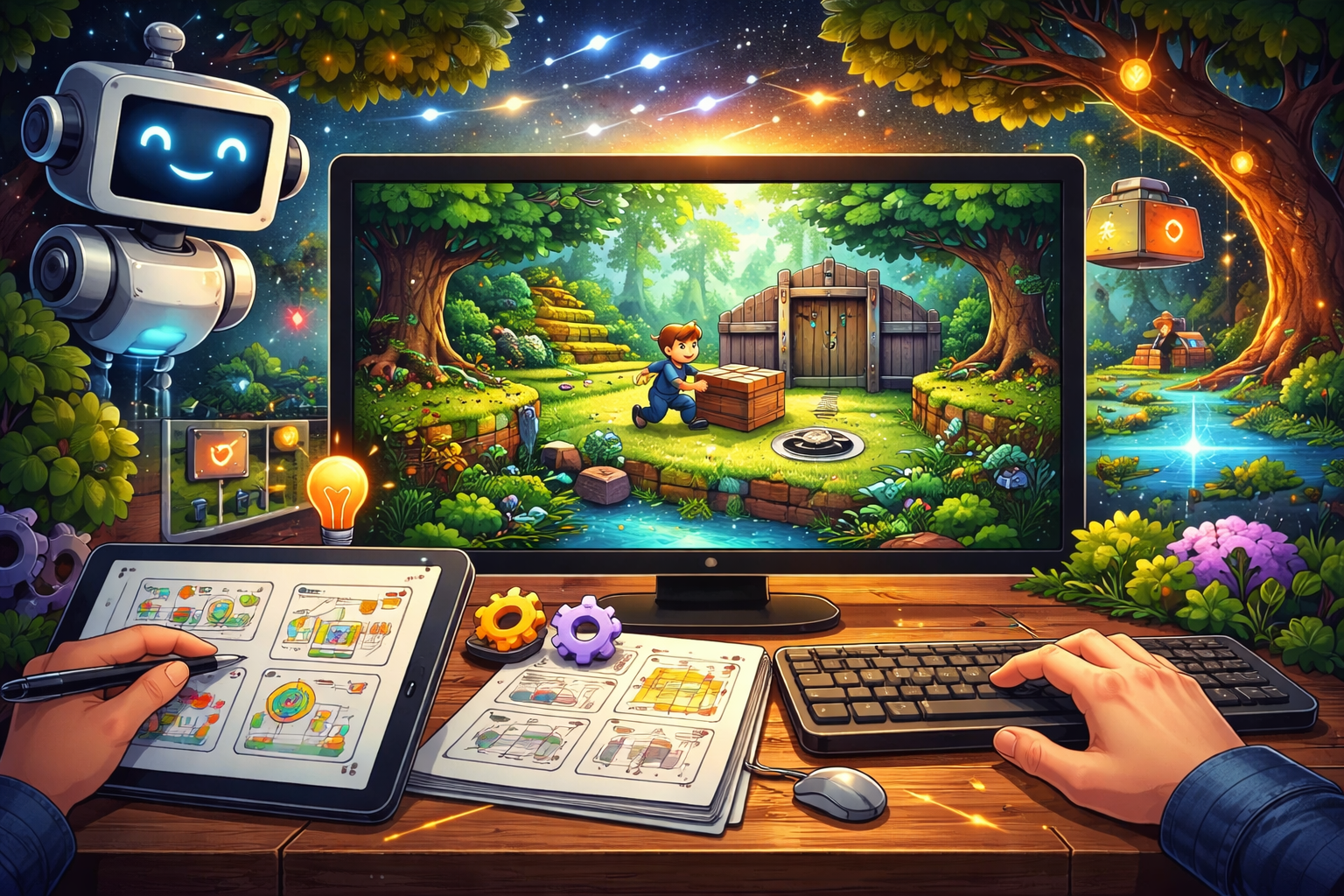
How to Use AI to Build Interactive Game Environments
Game environments are the spaces where all the action happens, the ground players walk on, the objects they touch, and the areas they explore. When these spaces respond to what players do, the game becomes far more engaging. Many creators assume building such worlds takes too much time or skill.
It does not. Smart tools now let you describe what you want in plain words and build from those ideas quickly. You can create forests with moving leaves, rooms where boxes can be pushed, or open fields where objects react to player actions. This guide shows you exactly how to build interactive environments step by step, how to plan, create, add interactions, and test, so players enjoy moving through your world. No drawing or coding experience required.
Why Your Game World Needs to React to Players
A good environment does more than look nice. It gives players things to do and reasons to keep exploring. When a player pushes a box and it moves, or steps on a tile and a bridge appears, the world feels real. These moments create surprise and satisfaction that static backgrounds simply cannot.
Interactive elements encourage players to experiment and find new paths or secrets. A simple action like pulling a lever to open a door feels genuinely rewarding when it happens smoothly. Building these features early also helps you shape gameplay around the environment rather than bolting them on later.
How to Plan Your Environment Before You Build
Start by deciding the type of world your game needs. Think about what players will mainly do, jump across platforms, push objects to solve puzzles, or explore open areas to find hidden items. Sketch a rough layout on paper or in a notes file. Mark important spots like the starting area, the goal, and places where interactions will happen.
Keep the first environment small. A focused area is far easier to test than a huge map. Write down the mood you want, a sunny meadow feels very different from a dark cave, and interactions should match that feeling. List the objects players will touch and what should happen when they do. Clear planning here saves a lot of time later.
Four Steps to Build Your First Interactive Environment
- Describe the overall setting. Explain the type of place, the main colors, and the size of the play area in simple sentences.
- Add the ground and boundaries. Tell the tool to create walkable surfaces, walls, and natural edges that stop the player from leaving the area.
- Place interactive objects. Describe items like boxes, buttons, doors, or moving platforms and what happens when the player touches them.
- Connect actions with simple rules. Make sure something that happens in one part of the environment logically affects another part.
Each step gives you something new to test right away. Repeat them to add more detail or expand the area once the first version feels solid.
Building the Base Layout Players Will Walk Through
Begin with the ground. Describe flat areas, hills, or platforms at different heights. Make sure there are clear paths from start to goal so players do not get lost immediately. Add natural boundaries, walls, water, or cliffs, that keep the player inside the intended space.
Include some background elements like trees or rocks that do not affect gameplay yet. They add visual interest without making the first build complicated. Once the base layout feels right, you can start adding things players can actually touch and change.
What to Add So Players Can Actually Interact with the World
Interactive objects are what turn a plain space into a living environment. Place boxes players can push to reach higher areas. Add buttons that open doors or activate platforms. Include collectible items that disappear when touched and add to the score.
Describe each object specifically. Say the box should move when pushed but stop when it hits a wall. Say the button should change color when pressed and cause a bridge to appear nearby. The more specific you are, the closer the first result matches your vision. Spread objects evenly so the space does not feel too crowded or too bare, and leave enough room for the player to move freely.
How to Make Interactions Feel Meaningful, Not Random
The best interactions give players clear feedback and real choices. When a player pushes a box into a gap, it should fill the space and create a path. When they step on a pressure plate, a sound or visual change should confirm it worked.
Link interactions together for simple puzzles. One button might light up a path, while moving a box reveals a hidden item. These small chains keep players engaged without becoming frustrating. For consistency, set general rules that apply to all similar objects, all pushable boxes behave the same way, all buttons give the same kind of feedback. This keeps the world predictable and fair.
Four Things Your Environment Must Get Right
Responsiveness: The world should react the moment a player touches something. Delayed reactions feel broken and kill immersion.
Clarity: Players need to know what they can interact with through visual hints like glowing edges or color differences, not through long instructions.
Balance: Interactions should be challenging but fair. One small mistake should not ruin an entire section.
Flow: Moving through the space and using its features should feel natural and encourage players to keep going.
Check these four things regularly as you build, not just at the end.
How to Test Your Environment Properly
After building the first version, play through the entire area several times. Try different paths and ways of interacting with objects. Note where movement feels awkward or where the intended solution is unclear. Test with both careful and rushed play to see whether the environment stays fair under different conditions.
If something does not work, describe the exact change you want and let the tool update it. Ask someone to try the environment without any instructions from you. Their experience will reveal confusing layouts or missed interaction opportunities that you stopped noticing. Use that feedback to make targeted improvements.
See What a Polished Interactive Environment Looks Like
Playing a well-made game is one of the fastest ways to understand what good interactions feel like. Turbo Smash Beast is a strong example, notice how every action gets a clear, satisfying response and how the environment keeps pushing players to engage. Use that as a reference point when describing how you want your own interactions to feel.
Why You Should Keep Your First Environment Small
Start with one room or one short level and expand only after it works well. A small area that plays perfectly teaches you far more than a large map full of problems. Reuse patterns that work well in new areas to save time and keep the game consistent.
As you add more interactive elements, check that everything still runs smoothly. Too many moving parts at once can cause slowdowns, so simplify where needed. Regular testing at this stage is what separates an enjoyable environment from an overwhelming one.
Quick Fixes for the Most Common Problems
If objects move too slowly, ask the tool for faster response times. If players keep getting stuck in corners, add gentle slopes or clearer edges. If interactions feel confusing, add stronger visual or sound feedback so players know their action had an effect. If newly generated areas feel empty, include a few standard interactive objects by default. These small adjustments consistently make a noticeable difference.
Putting It All Together
Building interactive game environments is straightforward when you plan carefully, describe your ideas clearly, add meaningful objects, and test as you go. The steps in this guide help you create worlds that respond to players and give them real reasons to explore.
Whether you want to play with friends online or build a solo experience, these methods let you focus on creativity while the tools handle the technical side. Start with one small area today, describe the setting, add a few interactive objects, and play through it. Each small improvement brings you closer to a game world that keeps players coming back.